Manifesta 16 Ruhr announces its Conceptual Framework and Urban Vision
At a press conference organised in Essen, Germany on the 29th of April 2025, Manifesta 16 Ruhr’s director Hedwig Fijen and Manifesta 16’s First Creative Mediator, Josep Bohigas presented the initial findings of the urban vision and the conceptual framework which forms foundation of the 16th edition of the European nomadic biennial.
In line with Manifesta’s core mission, the biennial will investigate how culture can inspire civic engagement and instigate positive social change through inclusive and participatory practices.
The Ruhr Area, with its rich industrial heritage, experienced widespread destruction during the Second World War due to its strategic significance as a centre of coal and steel production. In the post-war period, the region underwent rapid reconstruction, with new architectural and social models reshaping city centres and neighbourhoods. In preparation for Manifesta 16, the team has explored this history through the lens of urban transformation that played a central role in rebuilding neighbourhoods in the region.
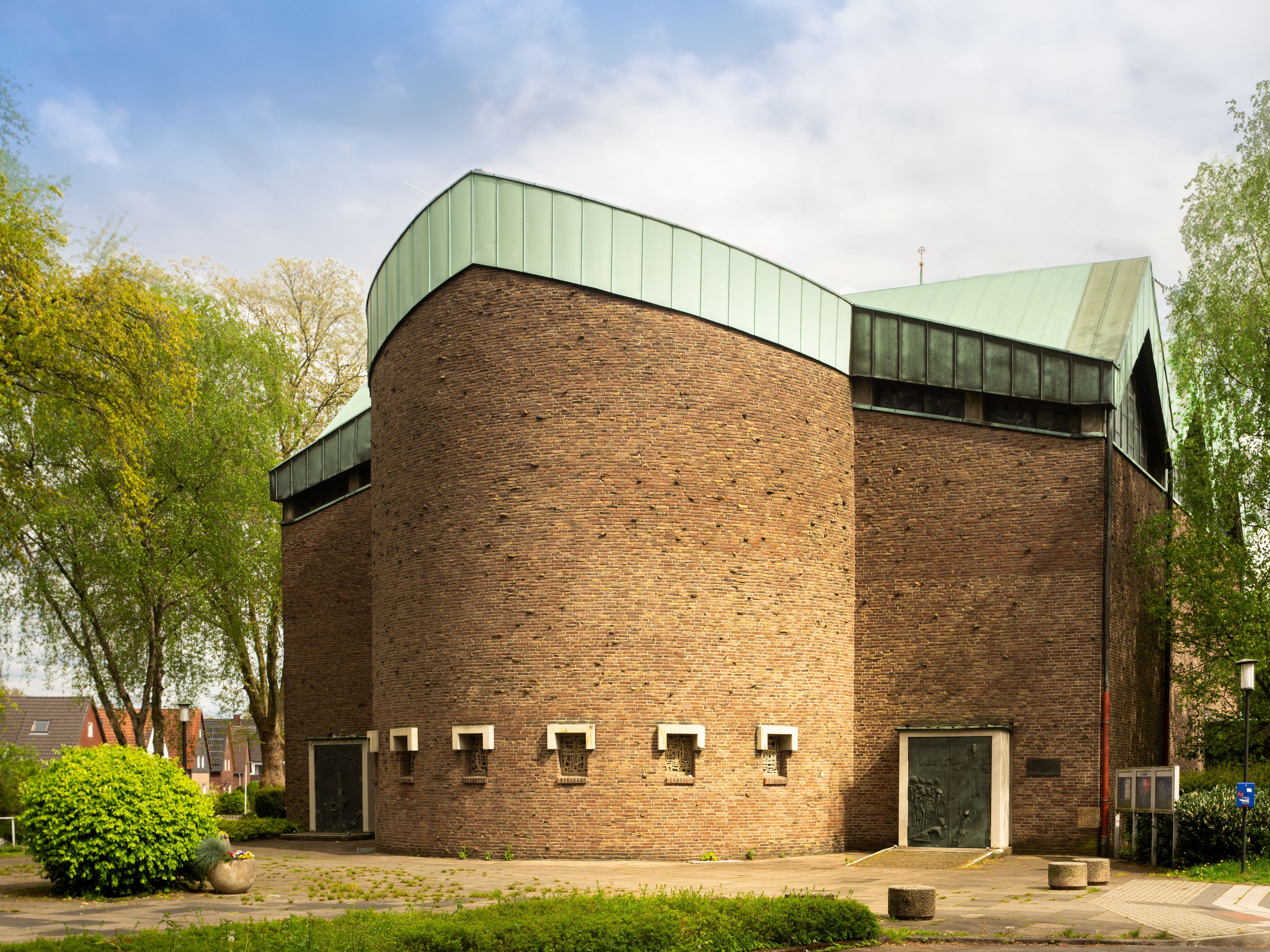
A key feature of this research concerns the role of churches in the post-war reconstruction of the Ruhr Area. These buildings, often constructed by local communities, came to symbolise civic identity and democratic participation. Today, however, many of these churches face redundancy. In Germany alone, nearly half of the country's 40,000 churches are expected to be closed, demolished, or sold within the next decade.
Manifesta 16 Ruhr will explore how these former places of worship might be repurposed as inclusive cultural and social spaces. By reimagining these vacant structures as sites for community gathering and artistic exchange, the biennial aims to promote intercultural dialogue and social cohesion—especially in response to current global tendencies of polarisation and nationalism. Historically, churches and other religious buildings have not only served spiritual purposes, but also acted as civic spaces — sites of gathering, exchange, and support within communities. From a civic and urban perspective, the church inherits the function of a public space from Roman basilicas and the Agora, which were centres of community life. Drawing on this legacy, the Manifesta 16 Ruhr collaborative process seeks to explore the potential of these vacant neighbourhood axis points.
This Conceptual Framework and especially the relation to these sites will be further developed by the Second Creative Mediator(s) in the autumn of this year.
Download the full Conceptual Framework and Urban Vision via the links below.
More news
![medium_20240321_Helena_Roig_Asamblea0012_bcdd3d3739.jpg]() Every two years Manifesta, the European Nomadic Biennial, is organised in a different Host City or Region in Europe. It...Join the Manifesta 16 Ruhr Citizen Consultations
Every two years Manifesta, the European Nomadic Biennial, is organised in a different Host City or Region in Europe. It...Join the Manifesta 16 Ruhr Citizen Consultations![20250304-Manifesta-This-is-not-a-Church-Workshop-Essen---Charlotte-Ernst---6-1.jpg]() As part of the pre-biennial research process Manifesta 16 Ruhr organised the interdisciplinary workshop This is not a church: future...This is not a church: Manifesta 16 Ruhr organises student workshops with TU Dortmund
As part of the pre-biennial research process Manifesta 16 Ruhr organised the interdisciplinary workshop This is not a church: future...This is not a church: Manifesta 16 Ruhr organises student workshops with TU Dortmund![20250524_ManifestaRuhr_CitizenConsultationWorkshop_Bochum_Anton_Vichrov-25-1.jpg]() Since Manifesta 13 Marseille, the biennial has organised Citizen Consultations to research local needs in our Host City or Region....Results: Manifesta 16 Ruhr Citizen Consultations
Since Manifesta 13 Marseille, the biennial has organised Citizen Consultations to research local needs in our Host City or Region....Results: Manifesta 16 Ruhr Citizen Consultations![20250205-Manifesta-Expectation-Workshop--12_c_Foto_Charlotte_Ernst.jpg]() On February 5 th , 2025, Manifesta 16 Ruhr held its first Urban Vision Workshop, marking a significant milestone on...Manifesta 16 Ruhr holds first Urban Vision Workshop
On February 5 th , 2025, Manifesta 16 Ruhr held its first Urban Vision Workshop, marking a significant milestone on...Manifesta 16 Ruhr holds first Urban Vision Workshop